

Jehan Idsassi, Featured By Influential Women, Turns Scientific Ambition Into A Mission For Girls In STEM
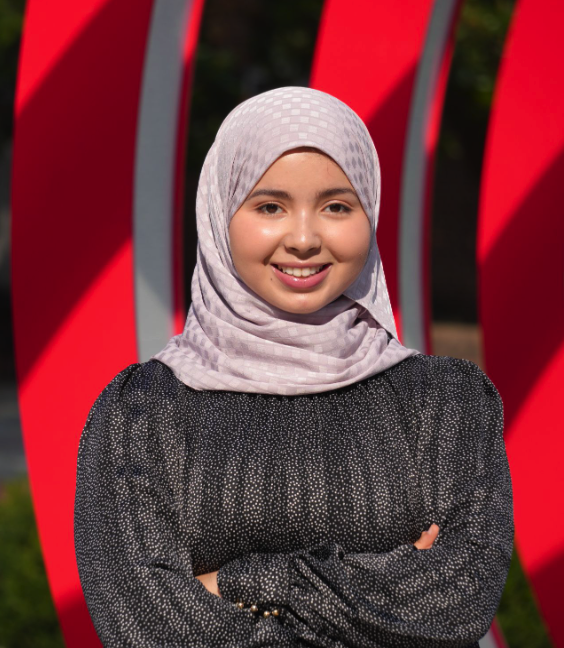
Laurel, Maryland – For Jehan Idsassi, influence is not measured by awards, titles, money, or how successful someone appears to the outside world. Instead, she believes influence begins with the courage to remain true to oneself, persevere through difficult circumstances, and recognize the responsibility that comes with becoming a role model for others.
That philosophy is reflected throughout Jehan’s academic, scientific, and advocacy journey. A rising junior at the University of Maryland, College Park, Jehan is pursuing a dual degree in Neuroscience and History on the pre-medicine track while participating in the GEMSTONE Honors Program. A first-generation college student of Moroccan immigrant heritage with Indigenous Amazigh roots, she has developed an interdisciplinary academic foundation that connects science, history, culture, education, and her long-term goal of becoming a physician-scientist.
Her path has already taken her into biomedical research, nonprofit leadership, women in STEM advocacy, and community education. She is the Founder and Executive Director of STEM Up, a non-profit organization, an initiative created to provide mentorship, workshops, and educational resources designed to encourage girls around the world to pursue opportunities in science, technology, engineering, and mathematics.
Jehan’s commitment to this work emerged from personal experiences with representation and educational inequality. She founded STEM Up during the COVID-19 pandemic after recognizing the lack of representation for minority women in STEM and witnessing educational disparities during visits to her grandmother’s village of Afella Ighir, Morocco. Those experiences helped shape a mission that remains deeply personal: ensuring that young girls can recognize their own potential and have access to people and resources that encourage them to pursue it.
Today, Jehan leads an international STEM Up team of 16 members, including members based in Morocco and across different institutions in the United States. She has also established a STEM Up chapter at the University of Maryland, College Park, expanding the organization’s reach within the academic community and plans to continue to spread the outreach of her non-profit organization, STEM Up, by launching chapters at other institutions across the United States.
At the heart of her work is a simple but powerful idea: representation matters.
As a young Moroccan-American Muslim hijab-wearing woman with indigenous Amazigh roots, Jehan understands what it means to enter spaces where people who look like her may not always be represented. Rather than allowing those challenges to define what she believes is possible, she has made them part of the reason she continues moving forward.
For Jehan, being an influential woman means remaining grounded and humble while refusing to allow challenges, discrimination, failure, or other people’s expectations to dictate the direction of her life.
She believes being a woman is only one part of the journey. Influence comes from how a person responds to the circumstances around her, how she views herself, and how willing she is to continue pursuing meaningful goals when the path becomes difficult.
That perspective has become particularly significant in STEM, where Jehan recognizes that being a minority, being a woman, and navigating professional and academic environments can create additional barriers. Yet she does not see those challenges as reasons to step away.
Instead, she looks toward the young girls who already view her as a role model.
Wherever she holds an educational toolkit drive which includes conducting science experiments, some young girls have come to see Jehan simply as “the scientist.” Within her family in the United States and Morocco, among students she studies with, and through her community involvement, she recognizes that other young women are watching her journey.
That awareness gives her another reason to persevere.
Jehan believes women should never interpret difficulty as evidence that they are incapable. She encourages young women to look within themselves during challenging moments and remind themselves that they can continue. Her own experiences have reinforced the importance of resilience, particularly when academic or professional obstacles create moments of self-doubt.
Her philosophy is also informed by the generations of women who have already worked to expand opportunities and rights for women around the world. Jehan believes that progress creates a responsibility for the next generation to continue contributing to that mission.
For her, that contribution extends beyond the United States. She wants to support girls and women internationally, particularly those who face barriers to education, careers, or opportunities that others may take for granted.
Through STEM Up, she is working to turn that belief into action.
The non-profit organization, STEM Up, provides mentorship, educational resources, and a supportive community geared towards empowering youth, particularly, girls in STEM whilst fostering their continued success in STEM. Jehan has also led educational toolkit workshops at her local mosque, the Islamic Community Center of Laurel (ICCL), and in her grandmother’s village Afella Ighir, Morocco where she hosted the first international educational toolkit drive in Morocco, creating opportunities for girls in her community to engage with science and envision themselves in scientific careers.
Her advocacy has included speaking engagements and White House-related experiences, while her cultural involvement has also allowed her to remain connected to North African heritage through being involved in student organizations at the University of Maryland, College Park such as Al-Maghreb United and serving as the Founder and Host of the, Medicine 101 Podcast. Across these activities, her objective remains centered on authentic, community-focused impact.
For Jehan, advocacy is not about appearing influential. It is about making sure that influence has meaning.
That same philosophy shapes the advice she offers younger women who are pursuing ambitious goals. Her first recommendation is to remain true to themselves and put their well-being first.
She emphasizes that putting oneself first does not mean disregarding family, friends, responsibilities, or other people’s dreams. Instead, it means understanding that personal well-being is essential to sustaining the effort required to pursue long-term aspirations.
Jehan recognizes that hard work can be physically and emotionally taxing and because of that, she believes that achieving a balance is essential within every aspect of life. Young women should be prepared to work hard, but they should also recognize when they need support, rest, or a change in approach.
She also warns that pursuing a dream inevitably means encountering people who may not provide encouragement. Some individuals may question someone’s abilities or suggest that an aspiration is unrealistic.
Jehan’s response is not to allow those voices to become defining.
She wants young women to remember that they can accomplish far more than they may initially believe. She encourages them to surround themselves with supportive women and to recognize the strength that can emerge when women support one another across differences in background, ethnicity, religion, economic circumstances, and personal experience.
For Jehan, diversity is not something women need to overcome. It is part of what makes communities stronger.
She also believes women should actively help one another when resources are unequal. If another woman lacks economic resources, emotional support, mentorship, or access to opportunities, Jehan believes other women should be willing to help her reach those opportunities.
That collective support, she believes, allows women to accomplish more together while still pursuing their individual dreams.
Her own success is rooted in a similarly strong network of support.
Jehan attributes her accomplishments first and foremost to God and her faith. She also credits her family, particularly her mother, for providing consistent support throughout her journey. Additionally, her cultural background has been another significant source of motivation. As someone of Moroccan and Indigenous Amazigh heritage, Jehan draws inspiration from family members who have built their lives from the ground up. Looking at her relatives in Morocco and even her own parents who immigrated from Morocco to the U.S. and were forced to rebuild their lives from scratch has reinforced her belief that a person can begin with limited resources and still create meaningful success.
Her culture has also helped shape her understanding of community. Jehan believes that being a minority does not prevent someone from succeeding, in fact, it propels them towards success and that having a supportive community can make an enormous difference.
Mentorship has been another critical part of her development.
Professors, principal investigators, and other mentors have helped shape her approach in her educational and professional journey as an aspiring physician-scientist. One of the most important pieces of advice she has received can be summarized in three interconnected principles: be genuine and passionate, prioritize quality over quantity, and stay true to yourself.
Jehan believes passion should be a genuine driving force. When people have the opportunity to pursue something they truly care about and have access to resources that can help them succeed, she believes they should pursue it because it matters to them—not simply because it looks impressive.
Quality over quantity is equally important.
Jehan has learned firsthand that stretching herself too thin can cause her to lose sight of her purpose. Doing too many things at once can make it difficult to maintain the quality and intention behind each responsibility.
As a result, balance has become an important part of how she approaches both her academics, research, and advocacy work.
That lesson is especially relevant as Jehan balances a demanding scientific education with leadership responsibilities at STEM Up.
Her academic experience has included coursework and research across areas of biomedical science such as immunology, neurobiology, and regenerative medicine. At the University of Maryland, College Park, she contributes to immunology and stem cell research involving working on projects centered on TGF-B signaling and techniques in which we can use TGF-B and other priming techniques to enhance mesenchymal stem cell therapies for clinical use. She has been able to gain a solid foundation in skills including qPCR, flow cytometry, cell culture, and much more.
Through the Gemstone Honors College, she is also part of a team-based research project that uses a mouse model to compare the efficacy of PACAP eye drops with intravenous PACAP as a treatment for glaucoma.
Her interest in these fields connects directly to her long-term goal of becoming a physician-scientist. Jehan is drawn not only to scientific discovery but also to translating laboratory findings into meaningful clinical applications.
That combination of research and medicine gives her academic journey a broader purpose.
At the same time, Jehan understands that the road toward becoming a physician-scientist is demanding. Her academic experience has included difficult courses, with organic chemistry standing out as one of the hardest classes she has taken.
There were moments when she questioned whether she was capable of succeeding or wondered whether a particularly difficult subject might become an insurmountable obstacle. Ultimately, she succeeded in the course, reinforcing a lesson that appears repeatedly throughout her philosophy: difficulty does not automatically mean impossibility.
The same principle applies to her work with STEM Up.
As the organization has expanded to a 16-member team, Jehan has encountered the practical realities of leading a growing organization. Team members are distributed across Morocco and different institutions in the United States, making communication, coordination, and task management more complicated.
Leading a team requires balancing accountability with flexibility. Jehan recognizes that people need guidance while also needing space to manage their own responsibilities.
Leading the launch of a STEM Up chapter at the University of Maryland, College Park while leading the leadership team of the national non-profit organization, STEM Up, has introduced another layer of coordination, particularly as students’ schedules and academic commitments can make it difficult to bring everyone together.
There are also administrative challenges associated with navigating leading a non-profit organization and ensuring that you are accommodating to the needs of everyone who works on the team.
Rather than presenting these obstacles as reasons to stop, Jehan sees them as part of the learning process that comes with building something meaningful.
The challenges of leadership also reinforce one of her most important values: quality over quantity.
Jehan does not want STEM Up to exist simply as an impressive list of activities or accomplishments. She wants the organization’s work to have substance and to create genuine opportunities for the girls it serves.
That distinction is important to her because she recognizes how easy it can be to become focused on the visible aspects of advocacy—the features, recognition, and public attention—rather than the mission itself.
Jehan deliberately tries to remain focused on the reason behind the work.
Her goal is not simply to be seen as a young woman in STEM who defied the odds stacked against her because of her background, whether as a minority or as a woman. Rather, she wants to use her position to make STEM more accessible and welcoming for other young women.
That mission is also why she encourages women entering STEM and related fields to seek out supportive environments.
Jehan believes young women should look for spaces that deliberately provide resources and encouragement. She personally sought out cultural and supportive communities that supported her background as a young Moroccan-American Muslim woman and gave her the opportunity to connect with other students who understood her experiences.
She also encourages young women to exhaust the resources available to them.
Many of the opportunities she has pursued, and continues to pursue, in her education grew out of the drive she developed in high school to keep seeking ways to grow as a student, an aspiring physician-scientist, and a person. Her message to other young women is to go looking for opportunities whenever they can, rather than waiting for them to appear.
At the same time, she emphasizes that independence does not mean doing everything alone.
Asking for help, in Jehan’s view, is not a weakness. It is a sign of intellectual curiosity.
A person who asks why something went wrong, why an experiment did not work, why a plan failed, or how to understand something more deeply is demonstrating a desire to learn.
Mentorship therefore remains central to the advice she gives.
Most importantly, she measures her journey by the impact it can have on others. For the girls who see her as a scientist, for young women searching for someone who understands their experiences, and for students wondering whether they belong in STEM, Jehan offers a tangible example of what perseverance looks like.
She knows there will be more challenges ahead.
She also knows that young women are watching and looking up to her as a role model.
For Jehan, that is reason enough to keep moving forward.
Learn More about Jehan Idsassi:
Through her Influential Women profile, https://influentialwomen.com/connect/jehan-idsassi
Influential Women
Influential Women provides a platform where women from all backgrounds can connect, share their perspectives, and create content that empowers themselves and others. Through storytelling, thought leadership, and creative expression, Influential Women amplifies voices that inspire change.
Editorial Team
Influential Women
email us here
Legal Disclaimer:
EIN Presswire provides this news content "as is" without warranty of any kind. We do not accept any responsibility or liability for the accuracy, content, images, videos, licenses, completeness, legality, or reliability of the information contained in this article. If you have any complaints or copyright issues related to this article, kindly contact the author above.
